
“Open Kitchen” is a monthly interview column covering the joys and frustrations of Brooklyn restaurant operation in all its many forms. It is also a local schmuck who likes to eat and a local chef shooting the shit and nerding out about food. First up, for January, is Jeremy Salamon, the chef/owner of two restaurants, Agi’s Counter in Crown Heights, and Pitt’s in Red Hook.
 The block just below Eastern Parkway’s southern service road, conveniently located next to the red line/green line/shuttle hub on Franklin, is quintessentially Crown Heights. There’s a juice bar, a cell phone store, a catty corner flower bodega, an ital spot, a beauty supply, a Golden Krust, and the obligatory gentrified coffee shop. What you won’t find on many other blocks in all of New York City, belied by its unremarkable dried mint edifice, is a restaurant like Agi’s Counter.
Inside, the pastel pink painted walls, glittering bespoke light fixtures, faux terrazzo countertops, and back shelves overstuffed with Shabbos candelabras, ceramic figurines, silver samovars, piles of cookbooks, a decorative Golden Girls plate, and a large glass jar of foil wrapped sucking candies—presumably delivered to the restaurant weekly, dumped out of a giant purse—elevates the space from merely suggesting a Bubby’s foyer and den, to smacking a guest over the head with it and demanding you clean your plate because “you’re skin and bones.” It’s a restaurant that nails the details, both of interior design and the food coming out of the kitchen.

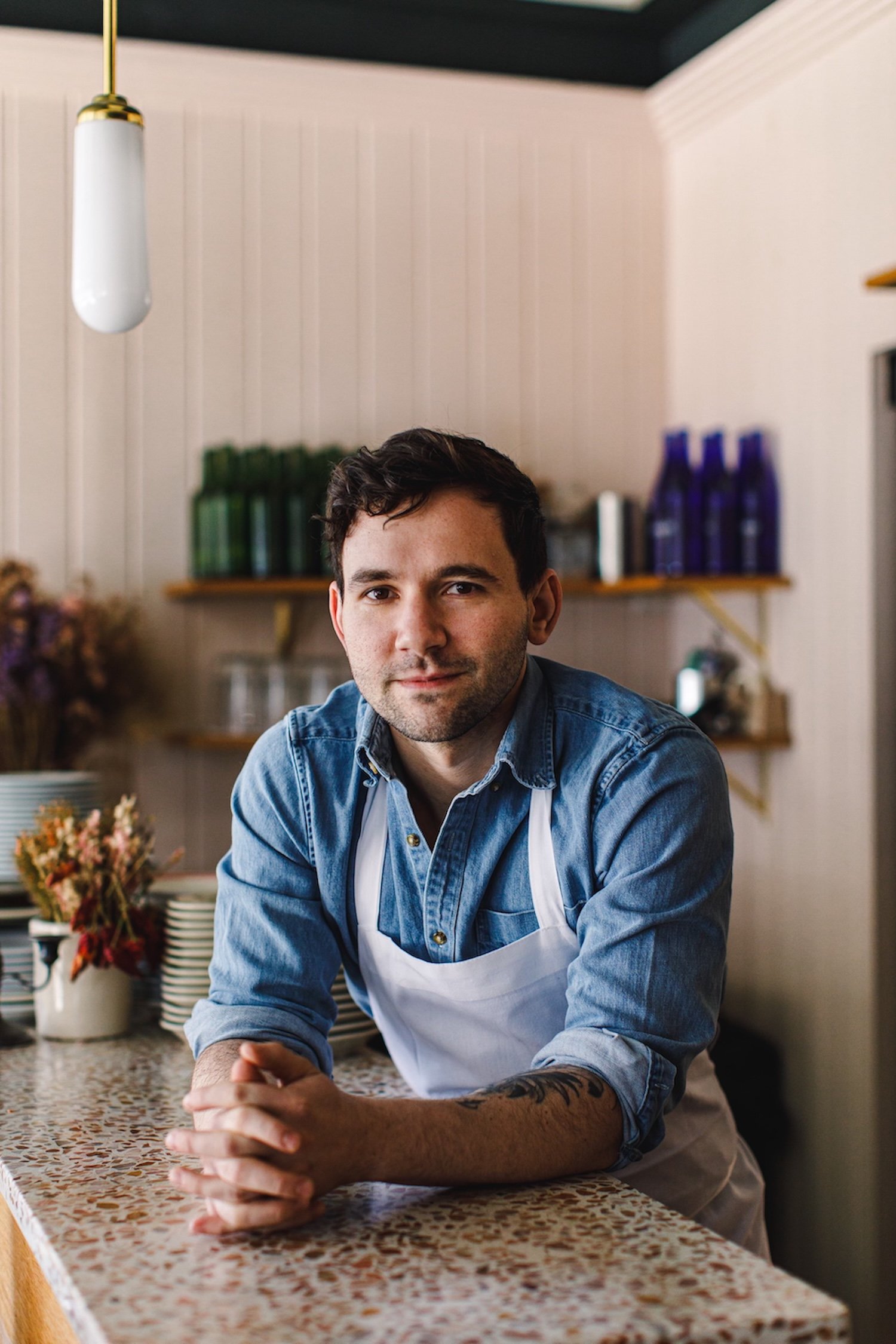
Photo by Abe Beame
Agi’s (pronounced “AH-geez”) is more than homey decor in a welcoming all-day neighborhood joint. Second generation Chef/owner Jeremy Salamon’s restaurant is reclaiming and reimagining the Jewish cuisine his family brought with them from Hungary (his grandmother fled during the Hungarian Revolution in ‘56, his grandfather is a Holocaust survivor), as many of the Eastern European Jewish families in New York did, as opposed to the appropriated and rebranded Arab cuisine that has proliferated under the banner of “Jewish food” in the borough and beyond over the past decade. Chef Jeremy has taken the largely brown and gray, shmaltz-drenched culinary history of a people and a place and splashed it with color and zest, applying modern technique, sensibility, and palate to a genre that was once dominant in this borough, but whose delis, appetizing shops, and cafes are rapidly vanishing, along with their history.
Like many people who live immediately East or South of the park, I’ve been to Agi’s many times. My last visit, however, was a reminder of the simple and profound pleasures it offers those looking for a slightly elevated sit-down lunch in our small corner of Brooklyn. It began with Nokedli Soup, a soul-warming, roasty chicken broth dotted with colander-dropped dumpling morsels and a heaping tablespoon of dill dumped on top, accompanied by a good book and a glass of delightfully pickled, high-acid, overcast skin contact wine from Somló, accurately portrayed by my warm and engaged server as “Tropical Christmas.”
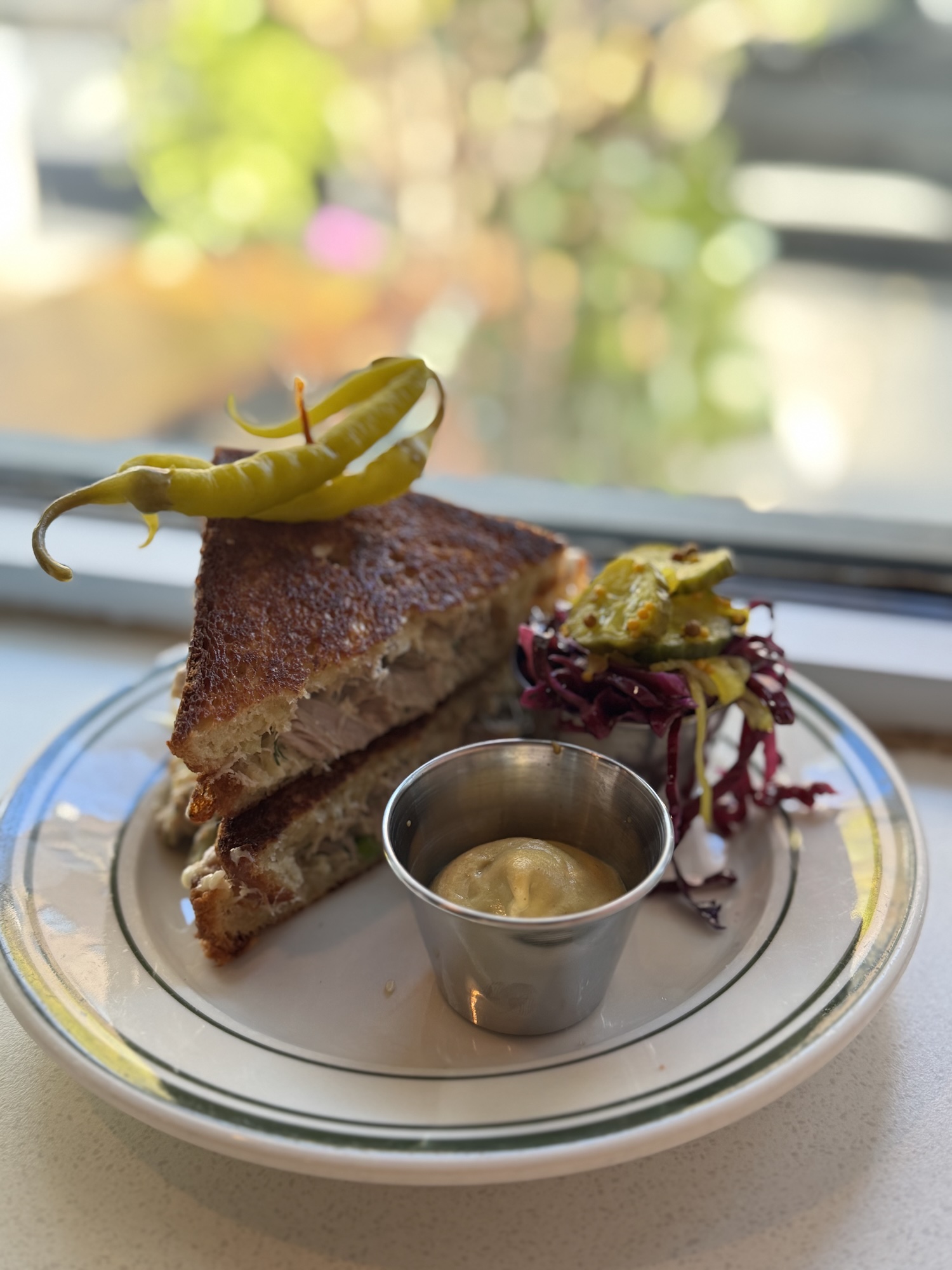
Photo by Abe Beame
The main event was a humble tuna melt, coated in uniform, golden caramelization of house-baked potato pullman loaf slices, fried so crisp it negates the customary need for garnishing with kettle chips. The house-confited tuna is more chunked than shredded, laced heavily with even more dill and diced celery, and thatched with Alpine cheddar, garnished with speared pickled banana peppers on diagonally halved and stacked sandwich triangles that provide a welcome bite. It is a masterpiece, even if you grew up with the prejudice that warmed and pungent tinned tuna salad with melted cheese sounded gross. It’s a sandwich you can build a beloved restaurant on, and Salamon has.
As I ate and drank in the front window on a stool overlooking Union Street, sunlight cast down the hill on Franklin Ave., the dining room was full of Brooklyn’s flannel-and-lace-swaddled 3-train creative class, sent out for weekday lunch directly from central casting. Mayer Hawthorne was playing gently through restaurant speakers, and that brand of artfully reconstructed vintage soul, that blue-eyed manufactured nostalgia, was the perfect accompaniment to my avant-garde tuna melt. The pedigree Salamon had earned in New York City kitchens was apparent—from his post-CIA kitchen gig under Gabrielle Hamilton at Prune to a stint under the Manhattan restaurant baronesses Rita Sodi and Jody Williams at Buvette, then helping to open Via Carota—he’s clearly learned how to make the guest feel at home. From my perch, it was hard to imagine his restaurant had faced any recent turmoil, but several weeks ago, Salamon suggested otherwise.
In a now-famous video message, Chef Jeremy came to Instagram to break a taboo, baring all to Agi’s nearly 51,000 followers. He explained how, despite the restaurant appearing to be a sturdy success—expanding with a Southern comfort food diner called Pitt’s in Red Hook a year ago—Agi’s was facing financial hardship, he was struggling, and if things continued along this trajectory, drastic action might be necessary. The outpouring of love and support was instantaneous, and the post went viral. I found the missive brave, poignant, and, honestly, kind of vague, so I decided to kick off the inaugural edition of “Open Kitchen” with a great chef, as well as a gifted navigator of the diverse culinary media space, to discuss his journey through philosophy, food, and business in Brooklyn.
(Author’s Note: This interview has been edited and condensed to make me sound like less of an asshole)
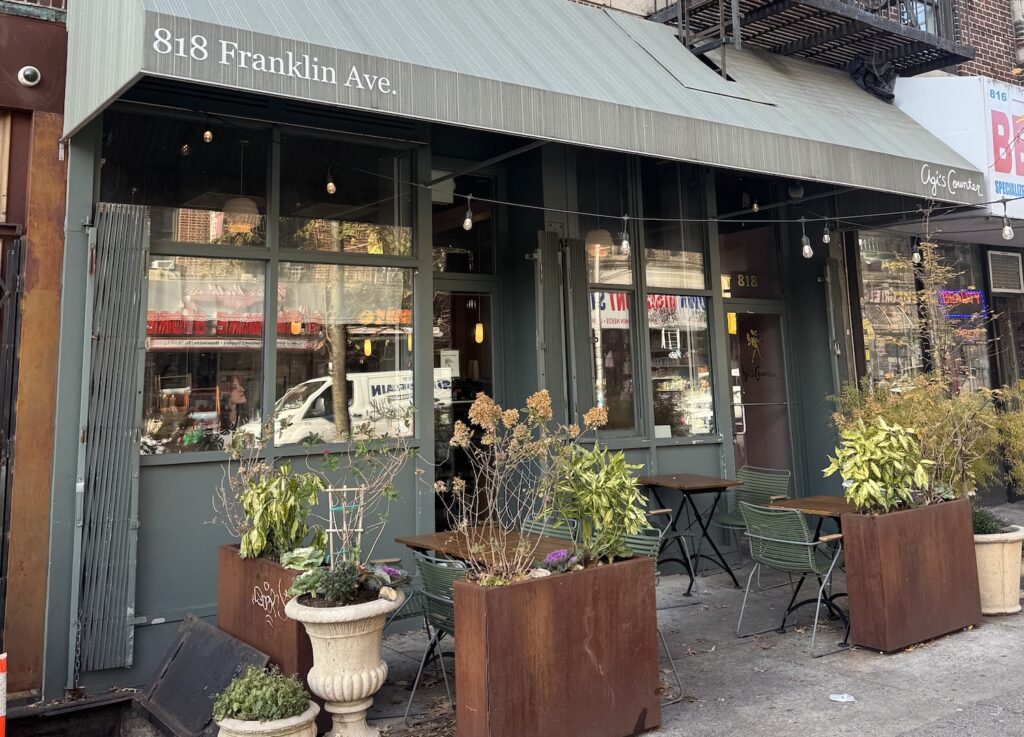
Photo by Abe Beame
BKMAG: I wanted to start by discussing unconventional restaurant promotion, so could you walk me through what you were in the process of doing when I called?
Jeremy Salamon: We partnered with this program called Table 22. They’re a platform that partners up with restaurants and small food and beverage businesses, and they offer monthly subscription boxes, which can be meal kits, wine clubs, or a provisions club with pantry staples from the restaurant, which is what we do. This is our third month doing it, and it’s just a really helpful additional stream of revenue, and also a way to interact with our customers. So, I’m putting together these bags, then a bunch of delivery drivers come in and pick them up.
You’re a chef who is hyper-media-literate and understands how to use the modern tools of restaurant promotion at your disposal. How do you balance maintaining your socials, your independent writing, PR, and television opportunities with restaurant operation? And what role do you think these tools play in the success of a business?
That’s a good question. I feel, obviously, food media is important. But it’s convoluted. From the chef/restaurant owner’s perspective, it is a necessary evil, and I do feel like there are moments in which it is used for good. It can bring the community together. And then there’s the unnecessary stuff, but even that stuff can also be necessary for promotional reasons.
I work with a publicist I’ve known for 10 years, and I think it’s been really helpful. I do think it is important to have somebody advocating for you because you’re only the hot shiny restaurant, the new thing on the block, for a limited amount of time, especially in New York City. And people forget about their neighborhood restaurants. Social media, Instagram, TikTok, all of those avenues are important because that’s how everyone filters information these days, for better or worse. I manage both of my Social accounts, and I think we’ve gathered a pretty amazing community through socials.
When you say certain elements of social promotion are unnecessary but necessary, what do you mean?
It’s tough because nine times out of 10, likes don’t translate to butts in the seats. So, it’s always hard to gauge what’s going to do numbers and what’s going to really strike a chord with your customers. On Instagram, which feels like the biggest avenue of communication at the moment, narrative-driven restaurants tend to be the most successful, at least from the outside. Financially, it could be a different story, but when there’s a real person behind it, people tend to gravitate towards that, since the pandemic.
The downside of it can become annoying with people who are just there for the hype. If there’s a post that gets somebody into the door that’s never been here before, that’s great. But what’s the frequency? Even if everything is great, I wonder what’s going to keep them coming back after snapping their photo and showing their followers I was there once. I’m trying to capture the people that are gonna come back two, three, four times a week, or come in once a week and order through DoorDash.
Courtesy of Agi’s Counter
My impression is that a lot of chefs and owners get sucked into the game of going for gimmicks that they think will lead to the quick hits of a viral TikTok queue, and that’s not the most sticky metric for a business to be dedicating resources to.
You know, we’re all out here trying to make a dollar and keep the lights on, so I get it. I feel very lucky. I have a great team, and we put a lot of loving care into everything, and we also just got really lucky with having these certain items on our menus that are staples, big staples that have a lot of gravity and bring people in.
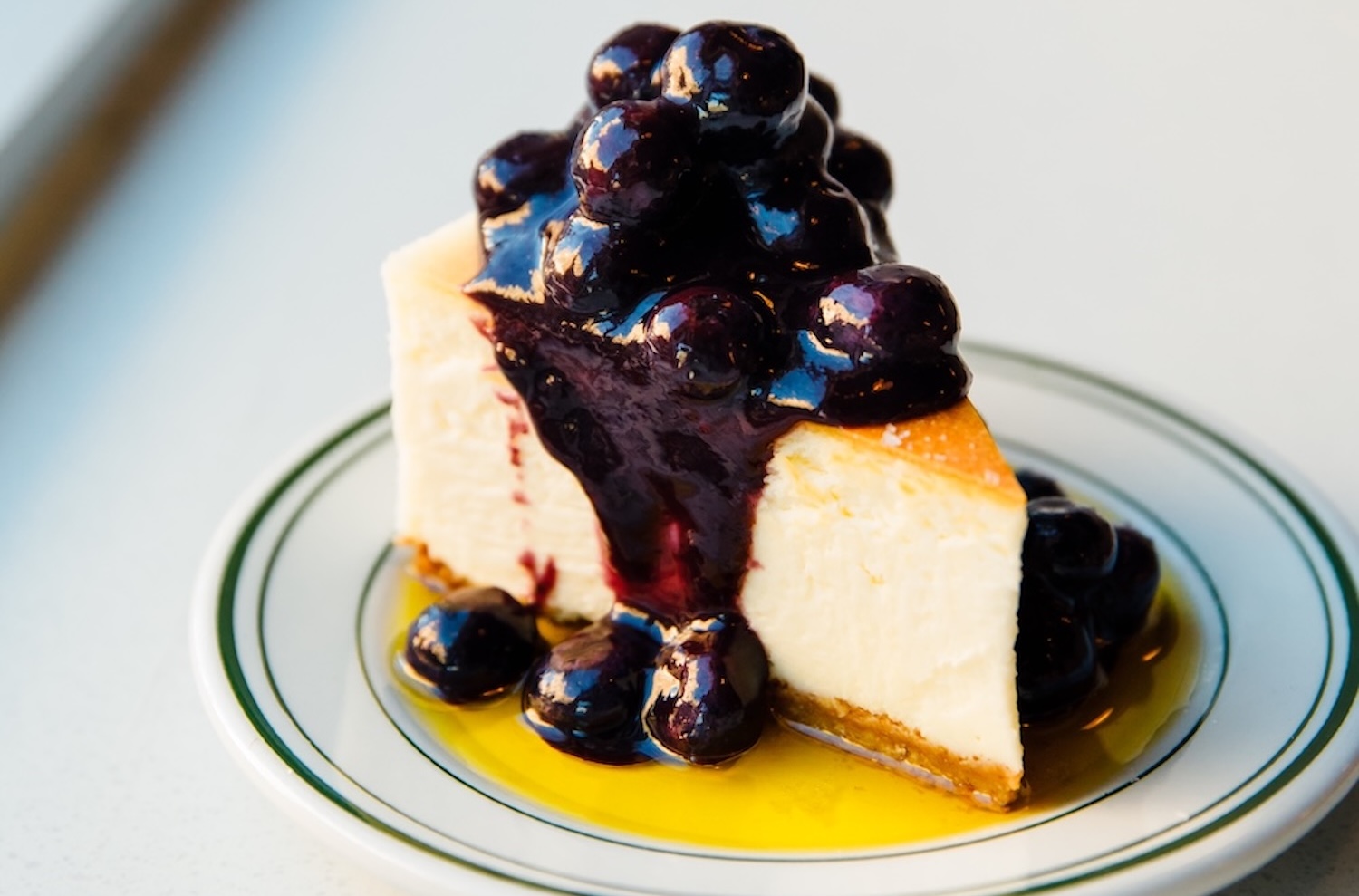
Agi’s is known for our tuna melts and our cheesecake, and those are two items that I am kind of personally sick of, but I’m very proud of them. We put a lot of time into developing them, but did I ever think tuna melt and cheesecake would be our thing?
The cheesecake was just named one of the “25 Essential Pastries in New York City” by The New York Times, and the tuna melt has been globally recognized. That’s kind of insane to me, but it gets people through the door and then they see there’s other things on the menu and they’re trying it, so I think we just got lucky that people think these things are great. These are the things that will go viral, so it’s both a blessing and a curse, I guess.
Can’t take the Big Mac off the menu. Gabrielle Hamilton did not have to worry about any of this. She got out of the game before this kind of thought process and decision-making was necessary. She ran what was, I would argue, one of the quintessential, no gimmick, no-frills neighborhood restaurants of her generation. What did you learn from her as a chef?
I learned a lot from her. She’s a genius, and I think Prune existed in a time and a place—it was like a unicorn. You can’t re-create that time in New York City because everything is different now. The food media landscape was different. The way people went out to eat and spent money—it was all different. I think she mastered the art of simplicity, but also functionality. Everything the restaurant did was very much her vision, and she stuck to that, but it was also organic. She worried about her restaurant every single day, and she was there even when her book came out. She was writing the cookbook, she was in the restaurant working the line at night, and that was something that I admired so strongly. I’d be on the line, one or two cooks behind her, and then she’d go off to do some writing and then work service, and that was just kind of her life. So I think, yeah, it’s Prune, one of the best restaurants in America, and it’s sad because that sort of restaurant can’t exist like that anymore.
You have to have more than a restaurant. You have to have a TV show. You have to have a social media presence. You have to franchise. And [Hamilton] didn’t have to do all that. I don’t think she was on any reservation system to my knowledge; it was all handwritten reservations, which is wild and something I tried to do when I opened up my second restaurant. I wanted to be more customer-facing, less technology. It’s possible, but it’s really hard.
The system has made it so hard to do that. And it kind of sucks, because I wish we didn’t have to pull out the mobile POS systems at the table for check presenters, but it does make it really easy for staff, and it does make service quicker, right? That’s just not what hospitality is to me. [My staff] has been trying to get me to switch from printed receipts to the mobile POS tableside, and I just don’t want a big bright screen lighting up your face in an intimate dining room. And if that’s a piece of the past that I can salvage, then I’m going to do it.
Courtesy of Agi’s Counter
The Kickstarter that you used to open Agi’s was a fairly unique success story. Is there any story behind it, or things that any other people could learn from what you did right?
We went back-and-forth for a while in terms of what was the best platform to use. Kickstarter is really meant for more products that are techie or games, and also things that are food businesses, but a restaurant is not as common because it’s not a product that you can ship and make instantly available to people. But Kickstarter also has the largest platform and the largest name, so I thought it could be great exposure if we got lucky enough and did it right, maybe we would be able to get on their front page and be more visible, and that’s what happened.
I think it was the personal story. I remember saying, “Well, if I’m going to sell this, I have to be front-facing, and I need to show people who I am so they can relate to me or feel bad for me, then give me money.” So I think a mixture of all those things really helped us, and I do feel like the odds were really stacked against us, because it was on a platform that wasn’t really known for building restaurants. But we raised $65,000 in seed money, and it was a really overwhelming experience, but a really cool experience…and I don’t know if I would ever do it again (Laughs). I think it was also in a very bizarre time of the pandemic where it was definitely not the end of it, but also now looking back timeline-wise, we were getting to vaccination cards, so I think people wanted to support food businesses in that time because so many were closing and struggling, and new food businesses were popular because it’s like, here’s somebody that wants to be a part of the future and rebuilding. It was a different time.
So the lesson is to launch a restaurant at the exact moment we’re coming off of a once-in-a-century pandemic, then it will be easy to raise popular support.
Exactly. Just wait for another global pandemic, and you’ll be fine. I do think it’s still…restaurants are definitely being built on that platform. I just think it requires a lot of hands-on. It’s very personal, and you just have to be ok with that, knowing that in order to get what you want, you’re going to have to really put yourself out there, and that’s not the most comfortable thing to do.
I thought your viral Instagram post was interesting in its bravery and its vulnerability, but also in what was left unsaid. Could you articulate exactly what is happening with Agi’s that prompted you to post that?
It’s easy, and it’s complicated. On social media or in the news, restaurants never really talk about our businesses, never really talk about struggling unless we’re in the middle of a global pandemic. And what goes on behind the scenes is far different than what people may see on the outside.
In this industry, I was raised with the rule that you don’t talk about your problems. And I think that’s really toxic. I don’t think that’s a great way for us to move forward as an industry, because if we don’t talk about our issues, if we don’t share the knowledge, if we’re not venting to each other, where does that leave us? So if you just look at Agi’s on Instagram, or you know I have a cookbook or whatever, from the outside looking in, it looks like a successful, healthy restaurant. Why would anybody think there is anything wrong? But the truth of the matter is, my Con Edison bill is thousands upon thousands of dollars a month, and my rent is going up every year.
You’re year-to-year?
Yeah, and there is sales tax. It’s just ugly for a 28-seat restaurant in the middle of Crown Heights. It’s not like it is in the West Village or Williamsburg. But we are very lucky to be near major transportation, and we have the Botanical Gardens and the Museum behind us. We’ve got tourists and attractions, but you know, it’s like we discussed, in New York, there’s always the next new restaurant. And every new business deserves a spotlight, but everyone’s forever on to the next thing, and then you’re relying on your locals, and you need to be this neighborhood restaurant. It’s really tough in this landscape. It’s really hard to get people to pay attention on a local level. And I take full accountability as a business owner. Of course I’ve made mistakes I’d look back at and think, “Maybe that wasn’t the best avenue to go down.”
We opened up as a daytime spot, and then we added on dinner, and it kind of solidified us as the daytime place, but daytime doesn’t make as much money as nighttime. With alcohol sales, your check averages are obviously higher at night. We’re a restaurant in a 28-seat space that more or less kind of reads as a café, or a glorified coffee shop, but we’re a restaurant, and it’s like trying to fit a square into a hole.
Courtesy of Agi’s Counter
It’s hard to change the perception of what you are to a diner once they have that fixed in their minds.
Right. It’s been tough to change the narrative to get people to see it as both these things. We do make money on the weekends, but there are other days that we are open where it is slower, and that has really hurt us. So it’s a melting pot of of things that have led to this point, and I’d seen there was a restaurant that I knew the owner of, that I hadn’t spoken to in a bit, but I saw on Instagram that they were closing, and I was just kind of in a dark space and I just said “I’m tired.”
In that post, everyone in the comments had said “Oh, I wish I’d known,” and I think a switch went off in my head, and I said to myself, “Well, what if you did now? What if I told you? What if I didn’t keep it a secret that your favorite neighborhood restaurant that looks great on the outside is really struggling on the inside, and what would you do about it?” So I put it out there, and it was definitely a very difficult video to make. And, because Agi’s has somewhat of a large following for a restaurant, people really seemed to listen. I mean, 24 hours after I posted it, I had messages from the Netherlands to South Africa.
And they did come in. They had lunch. They signed up for the provision boxes. They booked some private events for the holidays—it really opened up a door, which was amazing, and I was also just emotionally very overwhelmed by restaurant owners and business owners reaching out to me, saying, “I hope you know it’s not just you.” The other day, my executive chef told me, “It’s really trendy to feel sorry for Agi’s right now.” And I told her, “You know what? I guess it is.”
I do think that if you’re a neighborhood spot, if you’re somebody’s stop on the way off the train, or if you’re where somebody is picking up dinner on their way home, or if you’re the place where somebody celebrates their birthday, or if you’re a place where somebody might treat themselves to lunch with a book and a glass of wine—those places are worth preserving, and I don’t think people want those places to go away. So, I am glad that it had the response that it did, and it certainly bought us time, because that was something that we were running out of. The last month has definitely financially given us a cushion, but we know eventually that cushion will run out.
Do you see it as a momentary revenue hit, or do you think it’s going to lead to a lasting change in your business?
So we got that revenue hit, which I thought of as a bonus. But what I really wanted—people did read through the lines and did read the fine print—was help from somebody that may have different knowledge or more knowledge than I have in solving this puzzle, and that could potentially be an investor, or potentially just someone saying, “Hey, I have this knowledge and expertise. I can’t help you financially, but I know people who can help.”
And there are discussions being had right now about the future of Agi’s because, like I said, this cushion will run out, and what we’re doing is not sustainable, so things are in the midst of being reworked and changed. But we will be expanding hours. The menu is going to be changing a bit. Don’t worry, the tuna melt and the cheesecake aren’t going anywhere, but are we thinking about potentially outsourcing our bread? Are we trying to reduce labor? Are we trying to streamline things so we can execute as well with reduced labor? Sure. And you know, is there a bigger picture for Agi’s, and what does that look like, and who is involved?
Every day I wake up, and this is what I think about, and sometimes it can be a really nauseating, dark place to be at, and you’re just like, “This is something no one human should go through.” But then there are other days when it feels really hopeful, and that’s what I’m trying to hold onto right now: to be that for myself, and also for my staff. Before I posted the video, we had a big meeting with the staff, and I told them what was going on, and to my surprise, nobody left, and everyone said, “Well, we will be the orchestra on the Titanic. We’ll play until we can’t play anymore.” But everyone has stuck with us, our lights are still on. We are still paying our staff, and that’s what we’re doing right now. Just trying to figure it all out.
Whenever you get down, I would just urge you to remind yourself: Your grandfather survived the Holocaust. So, it’s not all that bad.
This is going to be a monthly column, and as part of it, I’ll be asking whoever I’m speaking with for the last great Brooklyn meal they had, dine-in or takeout, at the end of every conversation.
I go to Diner pretty frequently in Williamsburg, and that’s always a great date night spot for my partner, Mike and I. We had our 10-year anniversary there with our families, and it is always a consistently great meal. And then also, there is a new pizza place in Red Hook called Third Time’s the Charm. The pizza is great. The owners are great.
The post Open Kitchen: A Conversation with Jeremy Salamon of Agi’s Counter appeared first on BKMAG.