
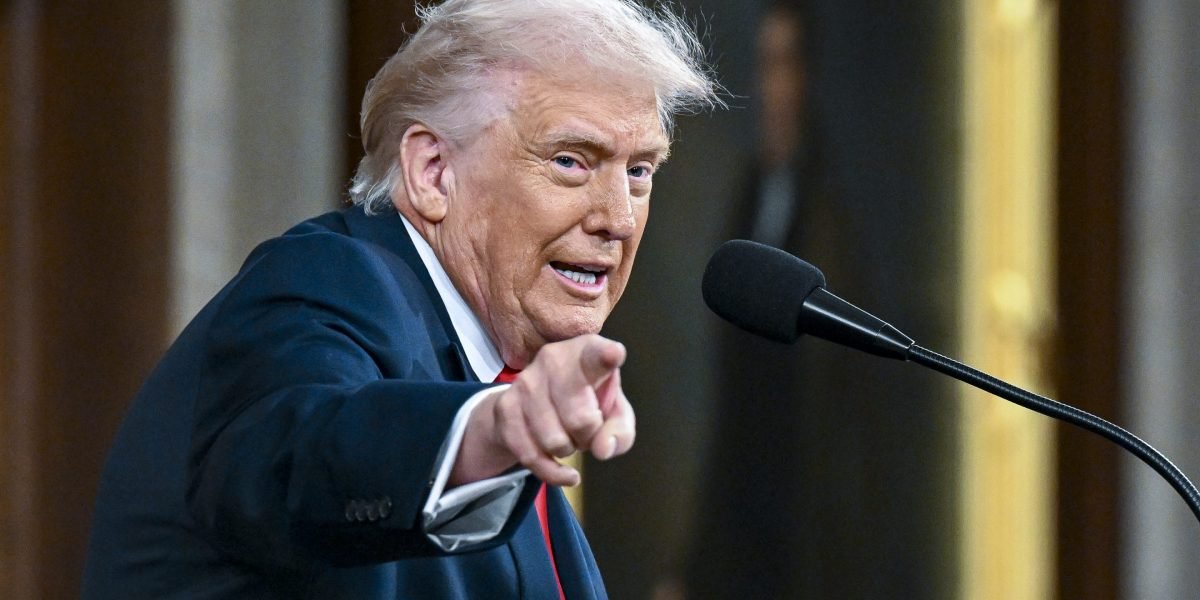
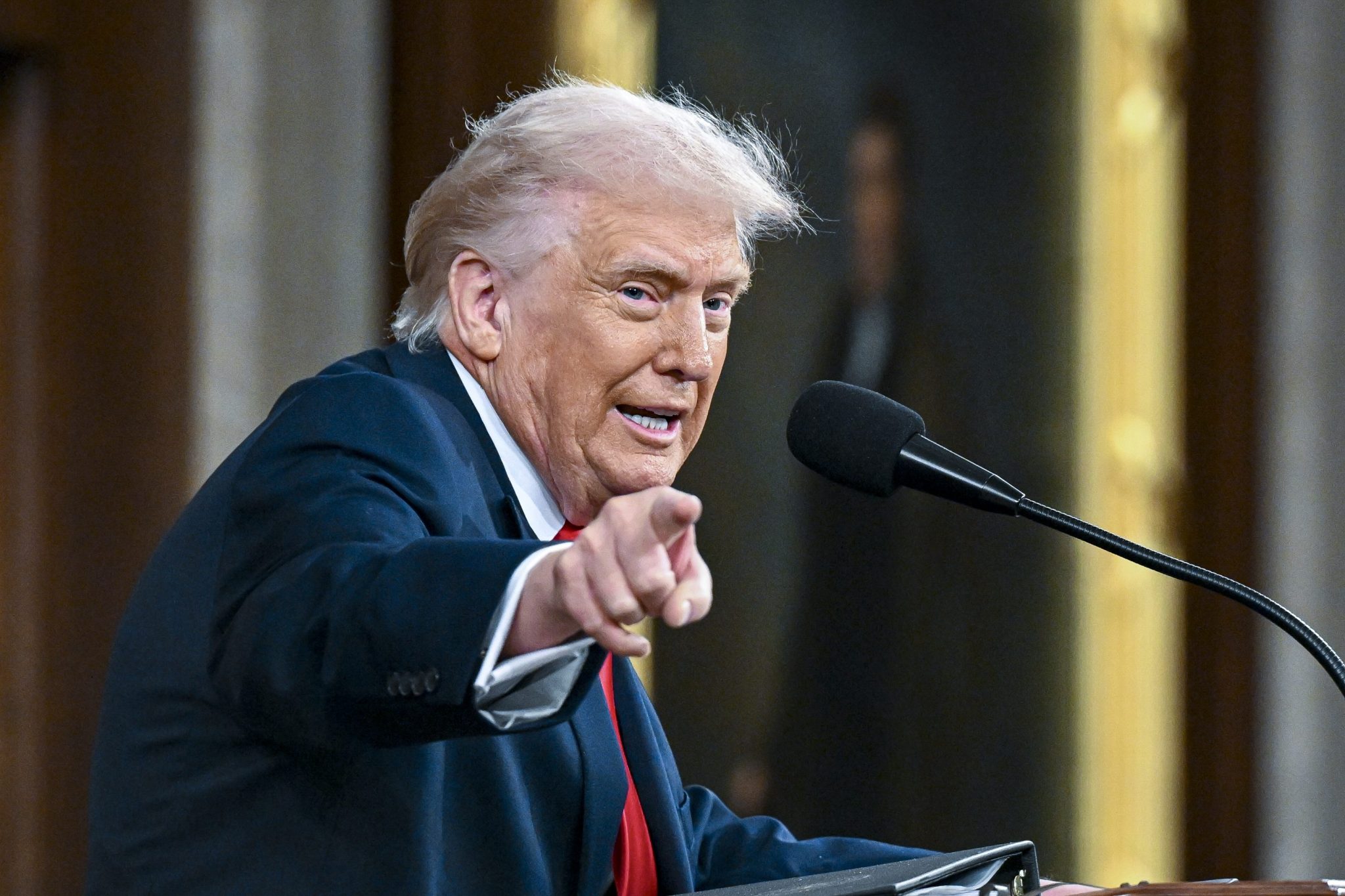
During his State of the Union speech last week, President Donald Trump took a victory lap, unveiling a new 401(k) program for workers lacking employer-sponsored programs. But the proposal has one small snafu: Some of the people are digging into their savings to stay afloat.
The proposal, a federal match of up to $1,000 annually for workers who lack access to employer-sponsored match 401(k) plans, looks past a critical feature of American life: who even has $1,000 to invest?
With nearly a quarter of all U.S. households living paycheck to paycheck, according to Bank of America, more workers are looting their 401(k) accounts to get by. A new report entitled How America Saves 2026 from Vanguard found that a record number of its 401(k) plan participants made a hardship withdrawal from their accounts, up to 6% last year from 5% the year prior.
Despite Trump touting a “roaring” economy during his State of the Union speech, many Americans are feeling the economic burn. Middle class households now encompass a smaller share of income while the top 1% doubled their slice of the economic pie, owning nearly $54 trillion in total wealth, according to Federal Reserve data. And many Americans feel stuck when it comes to retirement savings. Even after decades of saving, households still fail to break out of the middle class. What’s more, six-figure salaries aren’t even considered upper-class anymore in some U.S. states as downward pressures like inflation rattle American households.
K-Shaped retirement savings
Vanguard notes part of the reason more people have dipped into their retirement is because it’s now easier to do. With the rollout of SECURE 2.0, users can self-certify that they meet IRS requirements, eliminating paperwork and increasing the speed of certification. But the company noted only 3% of plans were offering the self-certification provision.
Retirement data shows an increasing K-shaped retirement savings environment, with a divergence among high and low-income savers. While more participants raid their savings, there’s an increasing number of people hitting millionaire status with retirement. The number of 401(k) millionaires grew to 665,000 in the fourth quarter of 2025, up more than 10,000 from the previous quarter, according to Fidelity Investment, as reported by MarketWatch.
However, those seven-figure savings are confined to participants who have been in the game longer. As Fidelity notes, the majority of those millionaire account holders have been saving for 25 years or longer. Millennials account for just 4% of those million-dollar balances.
The divergence isn’t just generational. It’s also impacted by pay type. A June 2025 Vanguard study found that hardship withdrawals were much more likely among hourly wage workers than salaried workers thanks to monthly income volatility incurred by hourly wage workers.
But the data shows it’s not doom and gloom for all Americans. In fact, many are seeing their retirement accounts grow steadily. Despite market volatility and an uptick in hardship withdrawals, the average 401(k) balance grew by 11%, up to $146,000, according to Fidelity. And Vanguard’s data shows a similar trend. The average account balances Vanguard administers rose 13% in 2025, hitting a record $167,970
Stil, Teresa Ghilarducci, a professor of economics at The New School and one of the economists behind Trump’s 401(k) plan, said in a recent interview with Fortune many low-income earners who have been sidelined from retirement plans for years doubt the payoff of a 401(k).
“They’ve just been excluded from a system like this for their whole careers,” she said. “They want to know what the catch is.”