

Marie’s Note:
Every so often, a piece lands in my inbox that says the quiet part out loud and this one doesn’t whisper, it declares. Written by an indie designer navigating the realities of size inclusivity in fashion, this op-ed challenges where we place our attention, our dollars, and our loyalty.
If you’ve ever wondered why access still feels limited, or why some brands seem uninterested in evolving, this is a perspective worth sitting with.
I was at the mall the other day and it was a ghost town.
This was the Beverly Center. A place where you once had to circle just to park. Stores had waitlists. There was energy. Demand.
Now? Empty.
The food court, the movie theater, the stores… quiet. Even Sephora wasn’t busy.
And it makes you wonder: if traffic is this low, if retailers are struggling just to get people in the door, why does size inclusivity in fashion still feel like an afterthought?
Because here’s an uncomfortable truth:
They’re just not that into us.
Marie’s Note:
This line might sting, but it also clarifies a lot. We’ve spent years asking brands to expand, include, and acknowledge. But what happens when we shift from asking… to choosing differently? What changes when we stop centering brands that have already decided we’re not part of their vision?
The Ongoing Gap in Size Inclusivity in Fashion
For years, we’ve watched brands come up with a thousand reasons why they can’t extend sizing past a 16 or 18. Why they won’t feature a model above a size 10. Why it’s “too complicated,” “too expensive,” or “not aligned with the brand.”
But let’s be honest.
When they picture their clothes on a runway, they don’t see us.
They see Kate Moss, not Kate Upton.
And in many cases, their vision doesn’t stretch much further than that… whether we’re talking about size, race, or ability.
It’s not always overt hostility. It’s something quieter, and just as limiting.
Indifference.
They don’t mind if we find a way to wear their clothes.
They just don’t care enough to design for us.
And still, I see my plus size sisters begging.
Asking to be included.
Campaigning for visibility.
Trying to convince brands to change.
Stop.
If a brand has to be convinced to see you, it will never fully serve you.
Instead, look at what already exists.
There are brands… talented, intentional design houses, that understand curves. That build garments for our bodies from the ground up. That think about fit, fabric, movement, and real life.
There is an entire ecosystem forming around us.
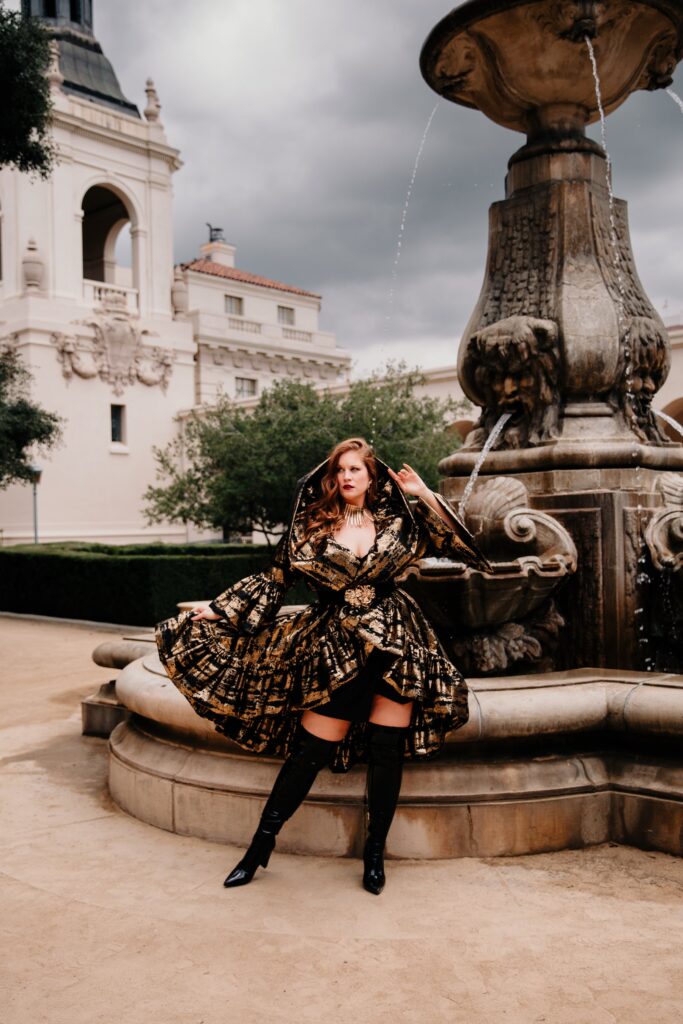
Follow platforms like The Curvy Fashionista. Ask the question on Threads, TikTok, or Instagram… and watch how quickly your feed fills with options.
Support them.
Because right now, many of those brands are fighting to stay alive, while we’re still trying to convince legacy houses like Dolce & Gabbana to care.
So maybe it’s time to stop asking for a seat at someone else’s table.
And start building, and protecting, our own.
Because we do have a plus size economy. It’s not perfect, but it’s real… and it exists whether or not mainstream size inclusivity in fashion ever fully catches up.
If we don’t?
We risk losing the very brands that already see us clearly.
And that would be the real loss… not being excluded by them, but failing to support the ones who were here all along, designing with us in mind.
The shift is simple, but it’s powerful:
Go where you are valued.
Spend where you are considered.
Support who already chose you.
Because the moment we stop chasing…
is the moment things start to change.
Marie’s Note:
This is the shift we’ve been circling for a while. The plus size market isn’t a question mark, it’s an ecosystem. And while legacy brands continue to deliberate, indie designers have already been doing the work: designing, testing, refining, and showing up for our bodies as they are.The opportunity in front of us isn’t just about visibility, it’s about sustainability. Who survives, grows, and thrives will depend on where we collectively decide to spend, support, and show up.
So, the question becomes: are we still asking to be chosen… or are we finally choosing back?
Tracy Christian is a veteran talent agent with more than twenty-five years in the entertainment industry. She is the President of TCA Mgmt, a premium boutique talent agency representing trained character actors, producers, and writers. Named as one of the top Black female executives by Forbes, Hollywood Reporter, Essence, Black Enterprise… Christian has represented a list as varied as producer Mona Scott Young, Academy Award winner Octavia Spencer, Emmy and Golden Globe winners Elizabeth Moss and Jeremy Piven, Emmy nominee Michael Kenneth Williams, Jamie Hector, Grammy Award winner Toni Braxton, and industry veteran Tisha Campbell. Christian is bi-coastal with residences in both Los Angeles and New Jersey.
After years of having difficulty finding clothes that accommodated her lifestyle, Christian started Sante Grace, an upscale plus size clothing line. Christian functions as both the founder and head designer. The line has been featured in multiple fashion magazines and blogs like The Curvy Fashionista, Fashion Bomb Daily, Who What Wear, Refinery 29 and Time Magazine.